


Brenna Dugan • August 5, 2026 • 0 comments

The EdTech Buying Calendar: When Districts and Institutions Actually Decide 2026-27

Share: 

When to Market, When to Sell, and When to Debrief Your Season
Acing the EdTech Sales to Customer Success Handoff Process

Picture an EdTech sales team evaluating progress at the end of a typical adoption season. In meetings, the team has been celebrating a few deals that landed and examining why a couple of pilots stalled. As they dive deeper, they start to feel stuck. They’re finding it difficult to pinpoint the exact places to focus for improvement in the next cycle.

These are common challenges across EdTech. Sometimes an organization struggles with customer tracking when colleagues or product champions move on. Other times, they face inconclusive data, or customer budgets are already allocated. This is where the EdTech buying calendar, sales teams, fiscal year budgets, and more don’t always align. That gap is where the EdTech sales to customer success handoff process can break down, and this blog helps you address that gap with adoption-science data and debrief strategies you can use right away.

How Your Customer Buying Calendar Affects Digital Marketing Strategy for EdTech

Higher education customers work on a fiscal year buying calendar that sometimes leaves flexibility between semesters. With K-12, both the school year and the budget that funds it run on fixed cycles. Regardless of your audience, and even the quality of your solution, decision-makers must contend with budget calendars, board approvals, grant windows, and governmental policy shifts from year to year. In this landscape, success is possible with a focus on accurate timing.  

ISTE’s EdTech buying guide for educators gives a window into how buyers think and how deliberate their procurement process can be. When buyers are met with outreach based on a marketing strategy that aligns with their needs, you know that your efforts are timely and can support the pipeline.  

PIP’s Season Debrief asks what worked, what stalled, and where the timing mattered. Score your season in five minutes and get your results and workbook straight to your inbox.

What Does the EdTech Buying Calendar Look Like?

Here’s the shift: the buying calendar stops being background context and starts being a planning tool for product teams the moment they write it down. Mapped out, it becomes a strategy a team can build from. It tells you when to reach buyers, when to pilot, and when a deal realistically closes.

The strongest EdTech companies build their own calendars on adoption science: how long it takes to implement your product, how long users take to onboard, and how long before they keep using it on their own and see its value. That’s different from planning around your organization’s sales quarter.

An EdTech buying calendar aligned with an EdTech sales calendar holds up, whether you’re a publisher, a nonprofit, an EdTech startup, or a platform running enterprise deals, because it’s built on your customers’ timeline. As sales teams adjust to the cycle, they must include feedback in their plans. Gathering data on what customers are actually using supports retention, and knowing where your sales team struggled can support your plans for the next one.
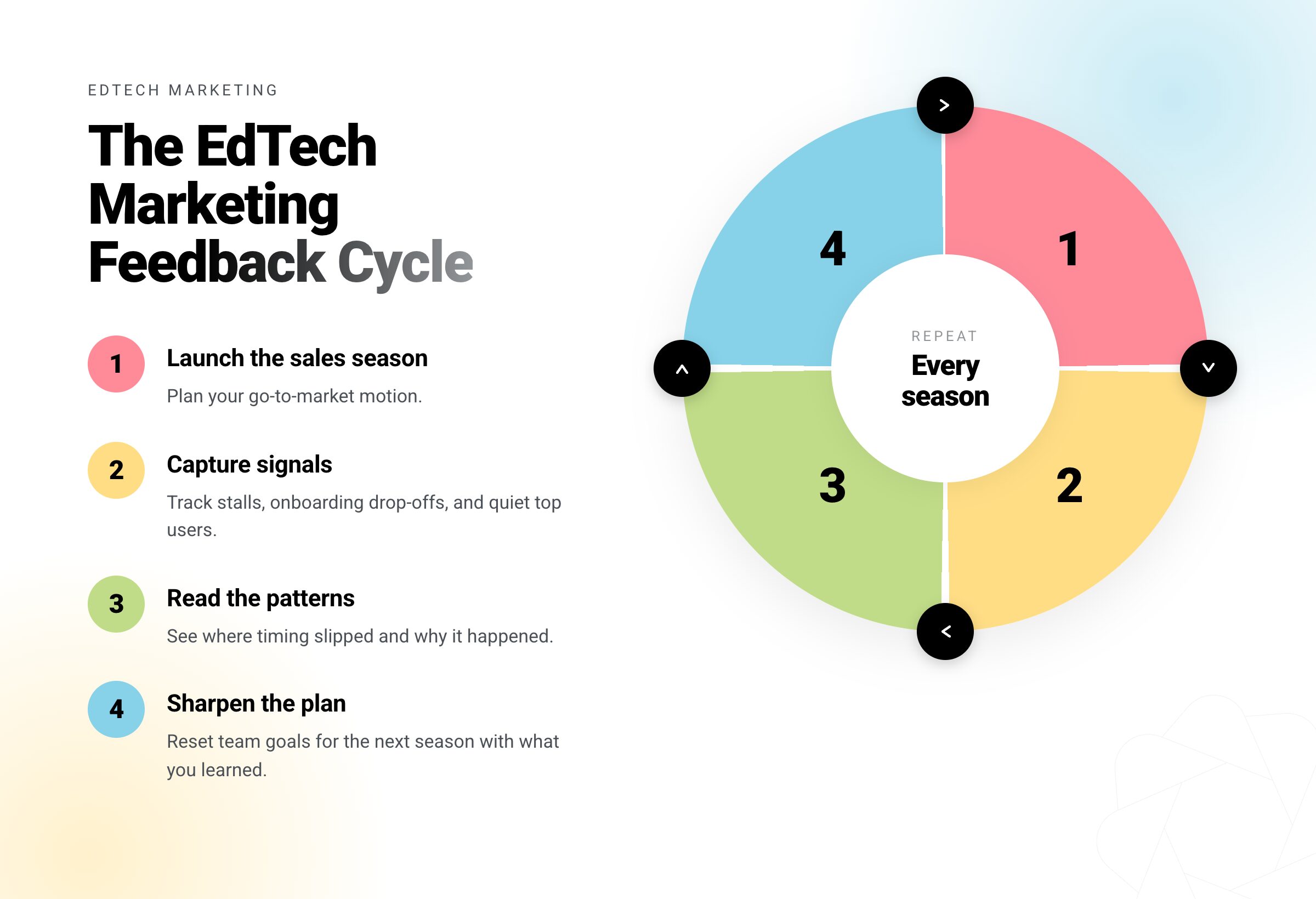
Feedback Cycle Image. This image is a MOCKUP for designers based on the existing PIP graphic shown below.

Why a Feedback Cycle is Essential for Your EdTech Marketing Strategy

A feedback cycle is what turns insights into better plans. Using feedback, you can start a sales season understanding stall patterns as signals you can act on. This might include knowing where onboarding drops occur, where top users go quiet, or where timing wasn’t aligned. Over time, each season’s feedback sharpens your sales team goals.

What Are Some Common Reasons That EdTech Organizations Face Stalled Sales?

Adoptions, pilot requests, and rollouts can stall for some common reasons: 

  • Onboarding gaps. The handoff from sales to customer success can lose efficiency during team handovers or reorganizations, which often causes customers to start from zero. Here’s why customer onboarding is an important growth lever. 
  • Champion loss. If you don’t have a backup strategy to support your relationship, losing key users among your customers can impact sales. 
  • Unclear success metrics. Without an agreed-upon success target, neither your organization nor your customer can say whether a solution was effective. 
  • Product rollout misalignment. If your product rolls out when schools are in testing season, or ready to close budgets, or preparing for holidays, there is nobody with capacity to adopt or champion your solution. 

A quick working session with PIP helps you check alignment with the buying calendar, see what worked last cycle, and review what stalled. You’ll leave knowing where to move and what can wait.

How to Run a Debrief Across the EdTech Sales to Customer Success Handoff

Considering the challenges of marketing to EdTech organizations, there are a lot of opportunities for success. This starts with a season debrief. The most successful debrief is specific, and shows what happened with data as opposed to opinions or emotions. Digital Promise advises districts on how to evaluate an EdTech pilot, and this offers a buyer’s perspective on the same process EdTech companies should follow. Their questions include the following. 

  • Which deals activated within 30 days, and which never did?
  • Where did the sales-to-customer-success handoff lose context?
  • Which stalls trace back to timing against the buyer calendar?
  • What did you agree “success” meant, and did you measure it?

A successful debrief enables you to point to a reason for a stalled deal using data, and it gets you started on a plan for the next edtech sales to customer success handoff process.

H3: Turning the Debrief Into Next Season’s Plan

Hindsight only supports your team if it changes what you do next. Once you can see why a season went the way it did, you can focus on two or three changes that could have moved the needle. Most commonly, deals could be improved with an earlier sales to customer success handoff, a defined success metric, or a calendar that respects testing season.

This is where a complete digital marketing strategy matters for EdTech. By turning one season’s debrief into next season’s plan, your team is building a strategy that reflects their EdTech buying calendar. It’s also where PIP comes in. A trusted EdTech partner, with former educators on staff, Partner in Publishing has the experience to support your team’s alignment with the needs of your EdTech customers. You don’t have to guess why a season went the way it did, and you don’t have to fix it alone.

Ready to go deeper? The EdTech Season Debrief scores your go-to-market engine across all five stages in five minutes, then sends your score out of 100 and the one stage with your biggest opportunity, plus a workbook to run the debrief with your team. Then, take your results into a Readiness Review with us to plan your next buying cycle.

About the Author

Brenna Dugan is Senior Marketing Manager at Partner in Publishing. A former educator and experienced EdTech marketer, she works across PIP teams to support client growth with human-first copy. She focuses on SEO & AI search, content strategy, and copywriting built to rank.

Ready to Partner with Industry Leaders?

Discover how we can help your EdTech brand grow and succeed.

Strategic Partnerships Start Here

Related Posts

view all
Category
'); iframeDoc.close();const iframeSummary = summary.cloneNode(true); iframeSummary.style.display = 'block'; iframeSummary.style.position = 'relative'; iframeSummary.style.left = '0'; iframeSummary.style.top = '0'; iframeSummary.style.visibility = 'visible'; iframeDoc.body.appendChild(iframeSummary); if (!iframeSummary) { throw new Error('No PDF summary found in isolated iframe.'); }const pageElements = Array.from(iframeSummary.querySelectorAll('.pdf-page')); if (!pageElements.length) { throw new Error('No PDF pages were found in isolated summary.'); } const images = Array.from(iframeSummary.querySelectorAll('img'));await Promise.all(images.map((img) => { if (img.complete) return Promise.resolve(); return new Promise((resolve) => { img.addEventListener('load', resolve, { once: true }); img.addEventListener('error', resolve, { once: true }); }); }));const pdf = new JsPdfCtor({ orientation: 'portrait', unit: 'px', format: [794, 1123], putOnlyUsedFonts: true, hotfixes: ['px_scaling'] });for (let i = 0; i < pageElements.length; i++) { const pageEl = pageElements[i]; const renderPageCanvas = async (el, useCors, removeBg) => { let target = el; if (removeBg) { target = el.cloneNode(true); target.style.position = 'fixed'; target.style.left = '-99999px'; target.style.top = '0'; const bgImage = target.querySelector('img'); if (bgImage) bgImage.remove(); target.style.background = '#ffffff'; document.body.appendChild(target); }try { return await html2canvasLib(target, { scale: 1.5, useCORS: useCors, allowTaint: false, backgroundColor: '#ffffff', scrollX: 0, scrollY: 0, width: 794, height: 1123, windowWidth: 794, windowHeight: 1123 }); } finally { if (removeBg && target && target.parentNode) { target.parentNode.removeChild(target); } } };let canvas; try { canvas = await renderPageCanvas(pageEl, true, false); canvas.toDataURL('image/jpeg', 0.98); } catch (pageErr) { canvas = await renderPageCanvas(pageEl, false, true); console.warn('PDF page fallback used (background not exported):', pageErr); }const imgData = canvas.toDataURL('image/jpeg', 0.98); if (i > 0) pdf.addPage(); pdf.addImage(imgData, 'JPEG', 0, 0, 794, 1123);const anchorTags = pageEl.querySelectorAll('a'); anchorTags.forEach(ctaLink => { if (typeof pdf.link === 'function' && ctaLink.href) { const pageRect = pageEl.getBoundingClientRect(); const linkRect = ctaLink.getBoundingClientRect(); const linkX = Math.max(0, linkRect.left - pageRect.left); const linkY = Math.max(0, linkRect.top - pageRect.top); const linkW = Math.max(1, linkRect.width); const linkH = Math.max(1, linkRect.height); pdf.link(linkX, linkY, linkW, linkH, { url: ctaLink.href }); } }); }const pdfBlob = pdf.output('blob'); const blobUrl = URL.createObjectURL(pdfBlob); const link = document.createElement('a'); link.href = blobUrl; link.download = 'EdTech-CS-Checklist.pdf'; link.style.display = 'none'; document.body.appendChild(link); link.click(); setTimeout(() => { URL.revokeObjectURL(blobUrl); link.remove(); }, 1500); } catch (err) { console.error('Error generating PDF:', err); const msg = (err && err.message) ? err.message : 'Unknown error generating PDF.'; alert('Could not download the PDF. Check the console for technical details.\n' + msg); } finally { if (pdfIframe && pdfIframe.parentNode) { pdfIframe.parentNode.removeChild(pdfIframe); } summary.style.display = 'none'; summary.style.position = ''; summary.style.left = ''; summary.style.top = ''; summary.style.visibility = ''; btn.textContent = 'Download Full Report'; } });}btnNextCS.addEventListener('click', () => { if (!isStepCompleteCS(currentStepCS)) { showStepErrorCS(); return; } if (currentStepCS < categoriesCS.length - 1) { currentStepCS++; renderStepCS(); } else { calculateResultCS(); } });btnBackCS.addEventListener('click', () => { if (currentStepCS > 0) { currentStepCS--; renderStepCS(); } });renderStepCS(); });
Category
'); iframeDoc.close();const iframeSummary = summary.cloneNode(true); iframeSummary.style.display = 'block'; iframeDoc.body.appendChild(iframeSummary); if (!iframeSummary) { throw new Error('No PDF summary found in isolated iframe.'); }const pageElements = Array.from(iframeSummary.querySelectorAll('.pdf-page')); if (!pageElements.length) { throw new Error('No PDF pages were found in isolated summary.'); } const images = Array.from(iframeSummary.querySelectorAll('img'));await Promise.all(images.map((img) => { if (img.complete) return Promise.resolve(); return new Promise((resolve) => { img.addEventListener('load', resolve, { once: true }); img.addEventListener('error', resolve, { once: true }); }); }));const pdf = new JsPdfCtor({ orientation: 'portrait', unit: 'px', format: [794, 1123], putOnlyUsedFonts: true, hotfixes: ['px_scaling'] });for (let i = 0; i < pageElements.length; i++) { const pageEl = pageElements[i]; const renderPageCanvas = async (el, useCors, removeBg) => { let target = el; if (removeBg) { target = el.cloneNode(true); target.style.position = 'fixed'; target.style.left = '-99999px'; target.style.top = '0'; const bgImage = target.querySelector('img'); if (bgImage) bgImage.remove(); target.style.background = '#ffffff'; document.body.appendChild(target); }try { return await html2canvasLib(target, { scale: 2, useCORS: useCors, allowTaint: false, backgroundColor: '#ffffff', scrollX: 0, scrollY: 0, width: 794, height: 1123, windowWidth: 794, windowHeight: 1123 }); } finally { if (removeBg && target && target.parentNode) { target.parentNode.removeChild(target); } } };let canvas; try { canvas = await renderPageCanvas(pageEl, true, false); // Throws if canvas is tainted canvas.toDataURL('image/jpeg', 0.98); } catch (pageErr) { canvas = await renderPageCanvas(pageEl, false, true); console.warn('PDF page fallback used (background not exported):', pageErr); }const imgData = canvas.toDataURL('image/jpeg', 0.98); if (i > 0) pdf.addPage(); pdf.addImage(imgData, 'JPEG', 0, 0, 794, 1123);const ctaLink = pageEl.querySelector('a[href="https://partnerinpublishing.com/contact-us/"]'); if (ctaLink && typeof pdf.link === 'function') { const pageRect = pageEl.getBoundingClientRect(); const linkRect = ctaLink.getBoundingClientRect(); const linkX = Math.max(0, linkRect.left - pageRect.left); const linkY = Math.max(0, linkRect.top - pageRect.top); const linkW = Math.max(1, linkRect.width); const linkH = Math.max(1, linkRect.height); pdf.link(linkX, linkY, linkW, linkH, { url: 'https://partnerinpublishing.com/contact-us/' }); } }const pdfBlob = pdf.output('blob'); const blobUrl = URL.createObjectURL(pdfBlob); const link = document.createElement('a'); link.href = blobUrl; link.download = 'EdTech-Growth-Checklist.pdf'; link.style.display = 'none'; document.body.appendChild(link); link.click(); setTimeout(() => { URL.revokeObjectURL(blobUrl); link.remove(); }, 1500); } catch (err) { console.error('Error al generar PDF:', err); const msg = (err && err.message) ? err.message : 'Unknown error generating PDF.'; alert('No se pudo descargar el PDF. Revisa consola para detalle técnico.\n' + msg); } finally { if (pdfIframe && pdfIframe.parentNode) { pdfIframe.parentNode.removeChild(pdfIframe); } summary.style.display = 'none'; btn.textContent = 'Download Full Report'; } });}btnNext.addEventListener('click', () => { if (currentStep < categories.length - 1) { currentStep++; renderStep(); } else { calculateResult(); } });btnBack.addEventListener('click', () => { if (currentStep > 0) { currentStep--; renderStep(); } });renderStep(); });

Social Media Strategy

From CEO thought leadership to brand engagement, this guide shows how to turn scrolls into sales.

Website Content & SEO

Your site is your handshake—learn how to structure messaging that drives conversions.

Video Marketing

Boost trust, engagement, and leads with video content that converts.

Strategic Copywriting

Great copy converts. Download this guide to see how messaging impacts every touchpoint—from email to website.